Cell and Satellite Networks
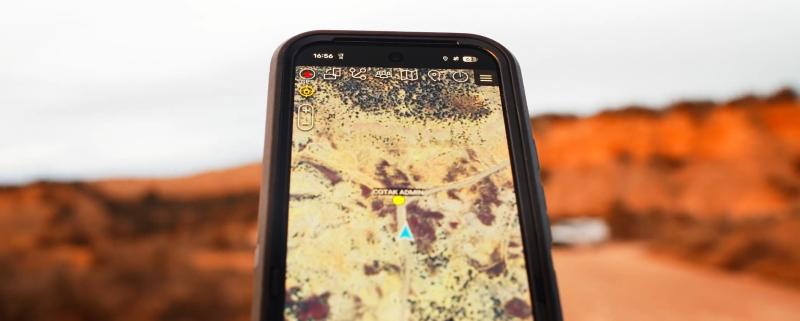
COTAK requires some type of data link to allow app users to share locations with each other. The simplest option for this link is cell service from any provider.
The COTAK team is frequently asked how users can use the apps to communicate in remote areas of Colorado, where cell service is spotty or nonexistent. A significant new option for these situations is cellular capabilities that enable smartphones to communicate directly with satellites overhead.
These direct-to-satellite capabilities vary widely; some, like the iPhone satellite messaging capability, rely on older communications satellites with relatively weak signals and require users to point their phones at the sky for optimal performance when sending small files like text messages.
Many other direct-to-satellite capabilities are coming online, and some use modern, innovative satellite technologies, such as phased-array antennas, to generate signals similar to those from a cell tower on the ground. This allows cell phones to function similarly to how they normally do, with support for apps that require only a small amount of bandwidth, such as TAK. While features that require a consistent connection, such as phone calls and streaming video, are still under development, these new capabilities allow apps like TAK to keep functioning as normal even when you lose connection to towers on the ground.
The first of these capabilities that the COTAK team has tested is T-Mobile’s T-Satellite service for Android phones, which enables ATAK to operate in areas without T-Mobile service. We have made a video to highlight this capability, check it out here! While this capability is currently Android-only, we expect to add iOS support soon. Similarly, while this works only on T-Mobile, other cellular carriers are quickly developing similar capabilities, and COTAK will continue to share news as this service becomes more broadly available.
Mesh Networks
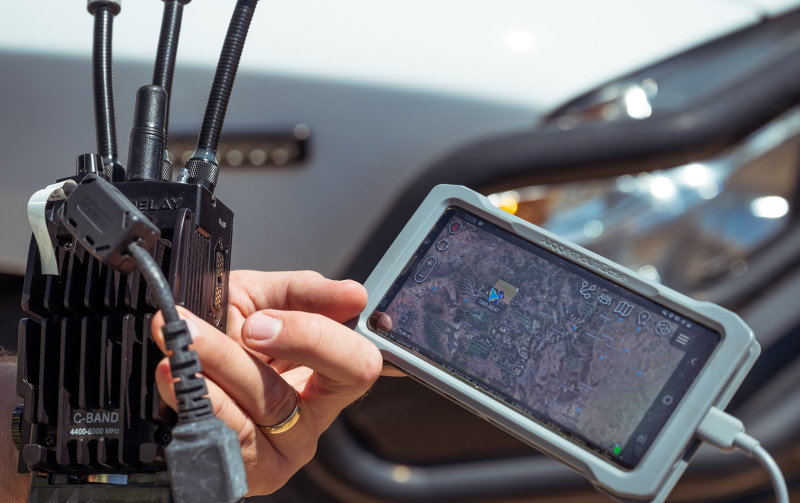
Mesh networks have long been used with the TAK apps in the military to connect soldiers directly together using radios, which form a 'mesh' and provide multiple paths for data to travel between radios. Some of these radios can be purchased by first responders as well, and provide unique capabilities to connect COTAK users when other types of connectivity may be degraded or absent. Mesh network radios are generally separated into two types:
Low Bandwidth: These radio systems do not give users a full internet connection, but do allow users to use basic features in the TAK apps such as seeing the locations of nearby users and sharing points and shapes with them. These radios typically connect to phones running the TAK app using Bluetooth, and are smaller in size than high bandwidth radios. Examples of these include the goTenna Pro and the Beartooth MKII.
High Bandwidth: These radio systems are capable of passing a fully functional internet connection, and can be used to extend cellular or satellite internet connections to additional users in the field. These radios connect to phones by creating a Wi-Fi access point, or using ethernet to USB adapters. In the TAK apps these radios can be used for location sharing, and also for actions requiring high bandwidth such as streaming video or sharing large map files. Examples of these include Silvus Technologies Streamcaster radios, and Persistent Systems Wave Relay radios.